HLTH USA never runs short on big ideas, and this year one question followed me from the keynote stage to the hallway to every dinner table: AI is answering people’s health questions, so whose science is it using?
A few moments stood out.
Sharecare on stage. I was proud to see our president, Dawn Whaley, join the “Medicaid on the Brink” panel. Drawing on Sharecare’s work as one of the first subgrantees of Georgia’s rural health transformation initiative (the GREAT Health program), she shared how AI-powered health innovation can support people across all walks of life and coverage status, including Medicaid members and the states that serve them.
Consumer AI is the new front door to health information. Apple’s new health AI study with OpenEvidence lets up to 200,000 U.S. adults ask health questions and get answers backed by clinical research. The lesson for pharma, as eMarketer noted: being found in AI answers is becoming a channel in its own right.
Trust and relevance are still the gap. New research from Lirio found that 58 percent of patients say the healthcare communications they receive don’t consistently feel relevant to their needs. People aren’t short on information. They’re short on information that fits their lives.
And then there’s the conversation I’m still thinking about.
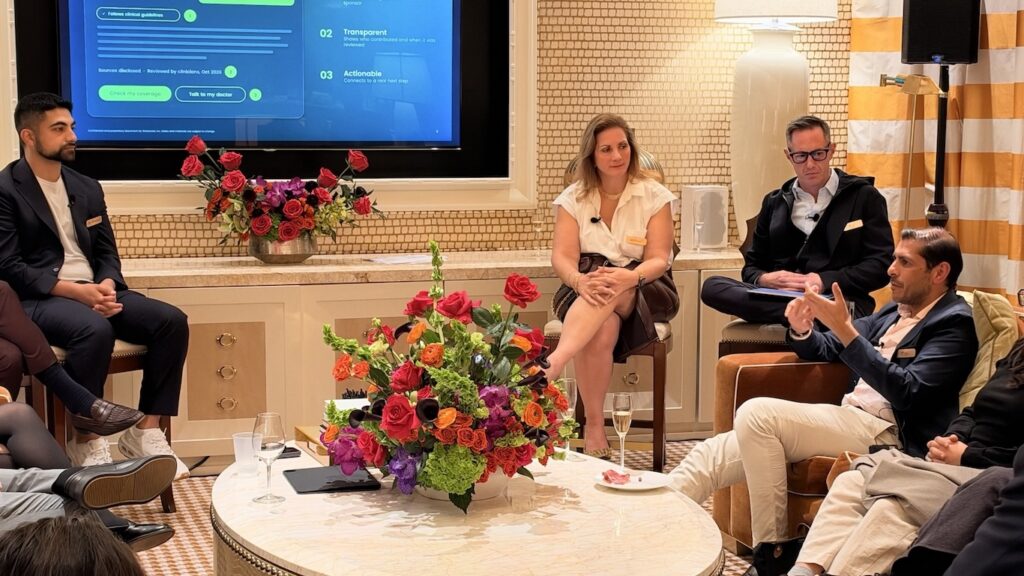
Outside the buzzing energy of HLTH’s show floor and stages, one of the most valuable hours of my week was a private, invitation-only session we hosted for pharma marketers, medical and commercial leaders, agency partners, and physicians. We called it “AI is answering. Is it citing you?”
Two industry thought leaders helped me set the tone for the conversation, bringing perspectives from both sides of the exam room:
- Melissa Gordon-Ring, global president at Omnicom Media Health, who brings two decades of experience helping some of the world’s largest health brands meet patients and physicians where they are
- Dr. Osama Hashmi, a dermatologist and the founder of Impiricus, whose team of 200+ physicians, engineers, and data scientists connects doctors with evidence-based pharma resources
We held it under Chatham House rules, so people could speak freely, even with competitors at the table. I won’t share who said what. But here are the takeaways I keep coming back to.
Every hand went up. When I asked the room how many people had used AI to ask a health question, everyone raised a hand. People now ask AI first, often late at night and long before they see a doctor or visit a brand’s website.
The website is no longer the hub. Share of voice is becoming share of answer. And today, 89 percent of AI citations about pharma brands point to sites the manufacturers don’t own. The companies that produced the clinical research are often missing from the answer.
Measurement hasn’t caught up. Clicks were the currency of search. Now we’re seeing people spend 30 minutes or more in a single AI conversation about their health inside AskMD. One participant suggested a better question: can we measure how much faster someone gets to clarity versus just “an answer”?
One question, three owners. A single patient question touches marketing, medical, and market access all at once. AI answers all three in one go, and often no one inside the company owns that answer.
Fluent isn’t the same as safe. Nobody asked for a smarter model. They asked for answers grounded in clinical evidence, and for a way to trust where those answers come from.
The question we left open
By the end of the night, the room kept circling back to one challenge. Pharma invests billions in clinical research. How does that science become part of the answer, in a way that puts people’s trust first?
It’s a challenge we’ve been thinking about since Sharecare’s earliest days, and one we’re actively working on now. We’ll have more to share soon.
Above all, this session confirmed what we believed going into HLTH: No single company will solve this alone. So if you’re a pharma marketer wrestling with how to make your science discoverable, trusted, and cited in the age of AI, I’d love to compare notes.